

Why EXACOR® Panels Are the Ideal Gypcrete Alternative – An Affordable Housing Case Study
4 Min Read March 19, 2026
When Noel Munoz, President of Integrity Builders, broke ground on Mesa Gardens Apartments — a 300-unit, 356,000-square-foot affordable apartment home development in Houston — the architectural plans originally called for traditional gypsum concrete underlayment.
However, as the project moved forward, Munoz identified a familiar threat to his project timeline: the scheduling volatility of specialty trades. He realized that sticking to the plan would leave his critical path vulnerable to external factors beyond his control.
Leveraging his influence as both builder and owner, Munoz looked for gypsum board alternatives and championed a strategic deviation from the blueprints. He proposed a solution that would eliminate the need for outside specialty crews entirely: EXACOR® underlayment panels.
Solving Schedule Uncertainty at Mesa Gardens
The Challenge: Eliminating Dependencies on the Critical Path
Integrity Builders identified the gypsum concrete application as a historical bottleneck. Specialty trades often faced scheduling conflicts or equipment shortages, which made this stage of construction a consistent risk to the project timeline. Past supply disruptions, including gypsum shortages during the COVID-19 pandemic, highlighted the need for more reliable, domestically available materials.
To regain control, Munoz decided to remove the third-party dependency from the critical path. By self-performing the underlayment installation, the team not only reduced potential delays but also saved time and money by avoiding additional subcontractor coordination.
The Solution: A “Drop-In” Replacement for Traditional Poured Floors
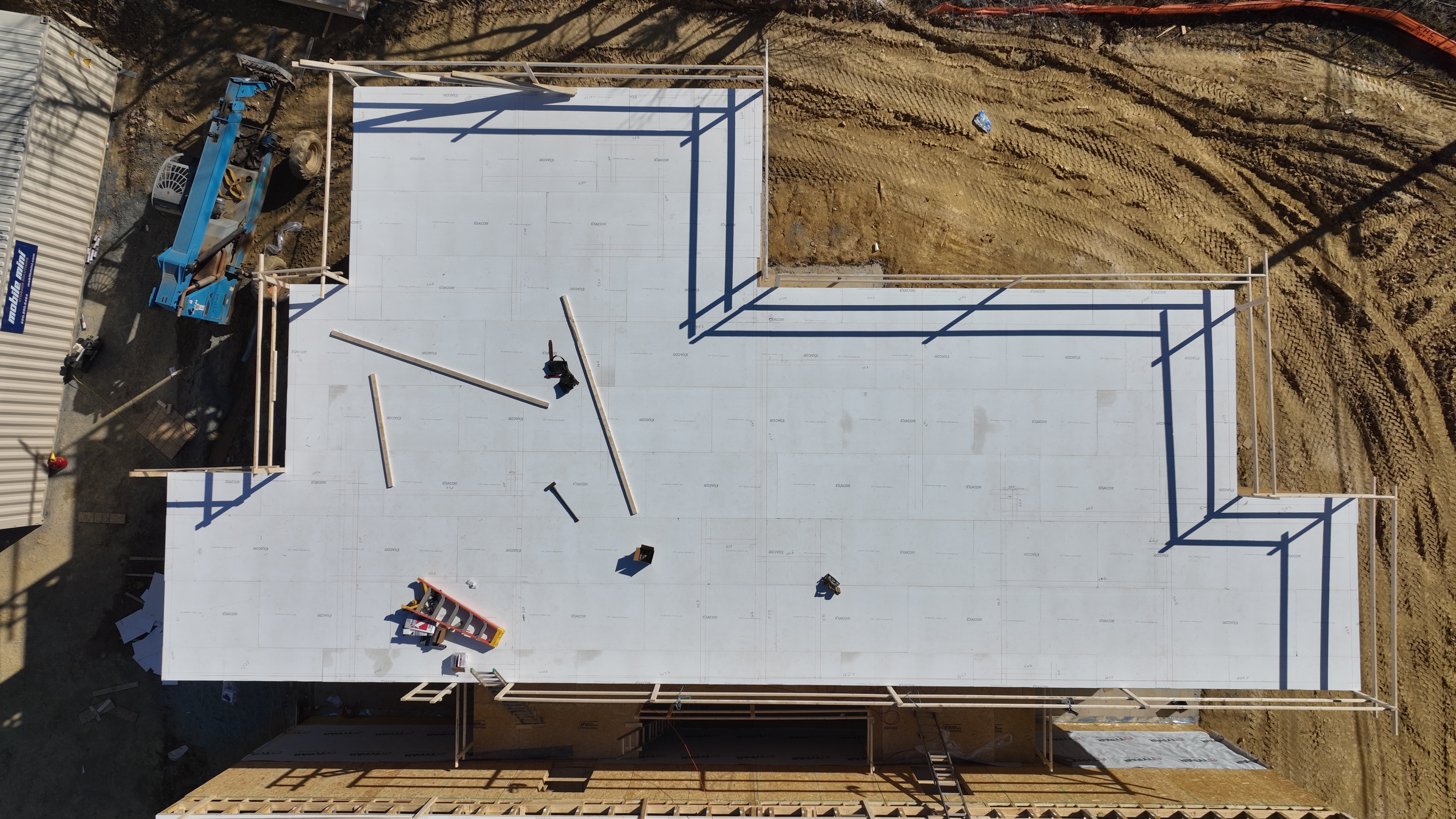
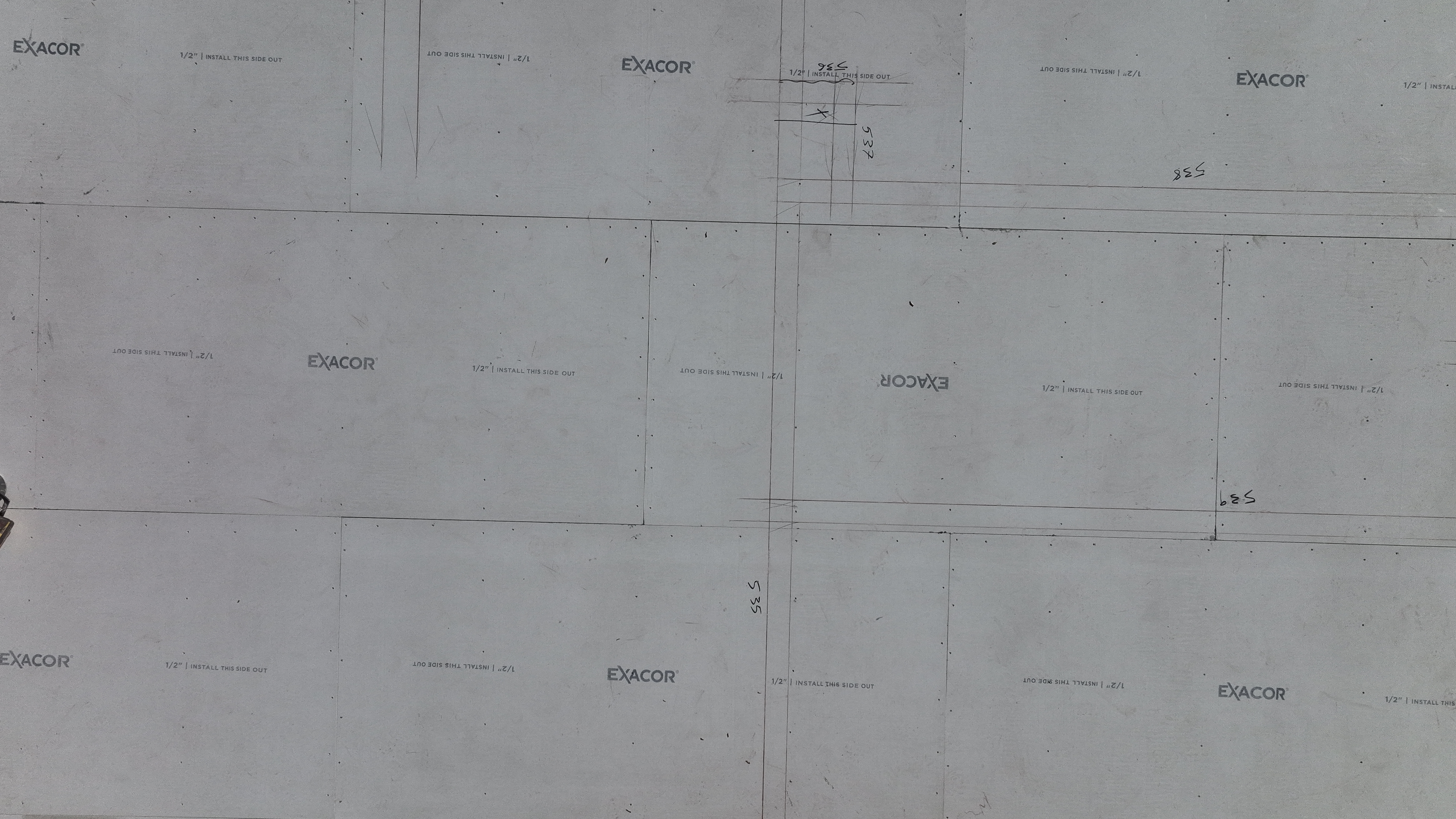
The builders used EXACOR panels as a lightweight replacement for the original poured floor specification, effectively “dropping in” the solution without requiring structural reinforcement or major redesigns to the truss systems. Instead of waiting on a specialized gypsum subcontractor, the existing framing crew installed the panels themselves using standard glue-and-nail techniques. Despite initial uncertainty, the crew found the installation surprisingly easy.
“The framing crew installed EXACOR on both projects, and it was just like installing a subfloor.” Munoz said. “There wasn’t a big learning curve. Once they mocked it up, everything went exactly as expected.”
Clearing the Path for Innovation
Securing Architectural and Regularity Approval
While the project architect was initially hesitant to deviate from the traditional gypcrete specification, Munoz secured approval by presenting comprehensive fire and sound data from Huber, supported by third-party testing from Intertek. This objective evidence addressed the design team’s liability concerns and aided in the decision to move forward with EXACOR.
As an affordable housing project, Mesa Gardens was subject to strict sound transmission requirements from the Texas Department of Housing and Community Affairs — standards often higher than market-rate builds.
Using Huber’s technical data, which can be found in the additional resources below, the builder verified that the panels met the necessary Sound Transmission Class ratings, as well as all fire ratings and UL assembly requirements for multifamily occupancy permits, clearing the way for a successful switch without compromising compliance.
The Result: Faster Dry-In and Streamlined Workflow
Eliminating Drying Time and Jobsite Bottlenecks
By eliminating the clean sweep, pumping and weeklong drying time required for gypsum underlayment, EXACOR panels allowed the team to bring in cabinets and finishes immediately. Durable enough to handle construction traffic right away, the panels also provided a smooth, level surface ready for luxury vinyl tile, eliminating the patching, prep and protection typically required with poured floors.
“It’s a solid product,” Munoz said. “I would tell other builders they should try it; give it a shot. You won’t regret it.”
For Mesa Gardens Apartments, the switch to EXACOR underlayment panels turned a potential schedule risk into a predictable, self‑performed workflow, eliminating drying time, simplifying logistics and meeting strict performance requirements to keep the two-year construction timeline on track for completion in early 2027.
Additional Resources
ESR-4635
Verifies EXACOR panels meet code requirements for underlayment use.
Sound & Fire Assemblies Handbook
Provides tested assemblies with fire ratings and sound performance data.